More Client Alerts

International Court of Justice decides that Myanmar committed genocide
On 19 November 2026, the International Court of Justice (the “ICJ”) delivered its judgment in Application of the Convention on the Prevention and Punishment of the Crime of Genocide (The Gambia v Myanmar: 11 States intervening).
Learn more
Payments to Non-Sanctioned Entities May Constitute Indirect Provision of Funds to Sanctioned Parties: EU Court Clarifies Applicable Criteria
In a preliminary ruling requested by France’s Cour de Cassation, the Court of Justice of the European Union (CJEU) concluded that a payment (from a Norwegian company) to a non-sanctioned Yemeni state-owned company, pursuant to an arbitral award, could materially result in an indirect provision of funds to sanctioned parties, prohibited under EU sanctions regulation, provided that it is established that the latter are in a position “actually to obtain those funds”[1]
Learn more
Argentina seeks provisional measures before ITLOS in dispute over drilling near the Falkland Islands (Malvinas)
The Argentine Republic has brought proceedings against the United Kingdom (“UK”) under the United Nations Convention on the Law of the Sea (“UNCLOS”) concerning the authorisation of hydrocarbon activities in maritime areas near the Falkland Islands (Malvinas).
Learn more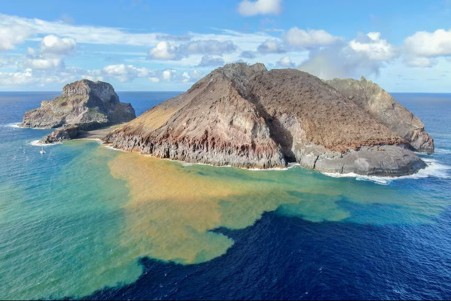
Vanuatu seeks ICJ determination of sovereignty dispute and initiates separate UNCLOS arbitration against France
On 31 August 2026, the Republic of Vanuatu filed an Application instituting proceedings against the French Republic before the International Court of Justice (“ICJ” or the “Court”), requesting that the Court affirm Vanuatu’s sovereignty over two uninhabited volcanic islands in the South Pacific, Matthew (Umaenupne) and Hunter (Umaeneg/Leka), and establish a single maritime boundary between the exclusive economic zones and continental shelves of Vanuatu and France (with respect to New Caledonia).
Learn more