
Published on 24 February 2026 in Client Alerts

We are thrilled to present the second instalment in the “Volterra Fietta PIL commentaries” podcast series

This insightful piece by Ahmed Abdel-Hakam examines the escalating global State rush for critical minerals and the complex legal interaction between State-to-State Memoranda of Understanding (MOUs) and existing International Investment Treaties.

Ahmed Abdel-Hakam is a Partner at Volterra Fietta. He is a Solicitor-Advocate (Civil and Criminal Higher Rights of Audience) before the Higher Courts of England & Wales and a French Avocat (Avocat au Barreau de Paris). Ahmed is an international disputes specialist, and he also practices the full range of public international law, both in contentious and advisory work. Ahmed is one of the few lawyers in the world who genuinely practice before international courts and Tribunals. He has been involved in a number of cases before the International Court of Justice (ICJ), the Court of Justice of the European Union (CJEU), and the European Court on Human Rights (ECHR). He also has extensive experience representing clients in investor‑State and commercial arbitration under major institutional rules, and in high‑value litigation in national courts in England & Wales, France, Switzerland, Italy. In legal directories such as The Legal 500, clients praise him as “a fantastic lawyer – a real brain when it comes to public international law” with a “thorough grounding in international law” and “his ability is second to none”. He currently sits on the Dispute Resolution Committee of the Law Society of England & Wales and a member of the International Law Committee of the New York City Bar Association.

As nations pivot toward green energy, the race to secure critical minerals has triggered a surge in bilateral MOUs. However, these diplomatic agreements often sit in the shadow of binding investment treaties, creating potential friction in investor-State dispute settlement (ISDS) and sovereign obligations. Understanding how these layers of public international law overlap is essential for both government policy makers and private mining conglomerates navigating the global energy transition.

The Volterra Fietta PIL Commentaries Series features perspectives from seasoned professionals with unparalleled practical experience. In this series, our partners dissect the core concepts, emerging principles, and pivotal developments shaping the future of international dispute resolution.

For further information, please contact info@volterrafietta.com.

More Client Alerts

| Client Alerts

International Court of Justice decides that Myanmar committed genocide

On 19 November 2026, the International Court of Justice (the “ICJ”) delivered its judgment in Application of the Convention on the Prevention and Punishment of the Crime of Genocide (The Gambia v Myanmar: 11 States intervening).  

Learn more

| Client Alerts

Payments to Non-Sanctioned Entities May Constitute Indirect Provision of Funds to Sanctioned Parties: EU Court Clarifies Applicable Criteria

In a preliminary ruling requested by France’s Cour de Cassation, the Court of Justice of the European Union (CJEU) concluded that a payment (from a Norwegian company) to a non-sanctioned Yemeni state-owned company, pursuant to an arbitral award, could materially result in an indirect provision of funds to sanctioned parties, prohibited under EU sanctions regulation, provided that it is established that the latter are in a position “actually to obtain those funds”[1]

Learn more

| Client Alerts

Argentina seeks provisional measures before ITLOS in dispute over drilling near the Falkland Islands (Malvinas)

The Argentine Republic has brought proceedings against the United Kingdom (“UK”) under the United Nations Convention on the Law of the Sea (“UNCLOS”) concerning the authorisation of hydrocarbon activities in maritime areas near the Falkland Islands (Malvinas).

Learn more
| Client Alerts

Vanuatu seeks ICJ determination of sovereignty dispute and initiates separate UNCLOS arbitration against France

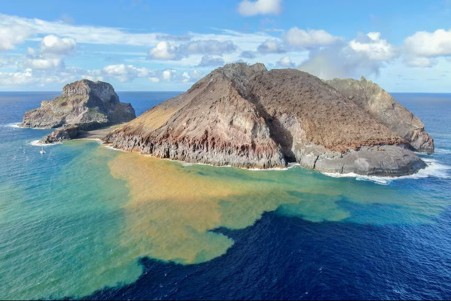
On 31 August 2026, the Republic of Vanuatu filed an Application instituting proceedings against the French Republic before the International Court of Justice (“ICJ” or the “Court”), requesting that the Court affirm Vanuatu’s sovereignty over two uninhabited volcanic islands in the South Pacific, Matthew (Umaenupne) and Hunter (Umaeneg/Leka), and establish a single maritime boundary between the exclusive economic zones and continental shelves of Vanuatu and France (with respect to New Caledonia).

Learn more
View all