On 15 November 2021, the US Government alleged that the Russian Federation (“Russia”) had that day conducted a test of a direct-ascent anti-satellite missile. According to a press release by US Secretary of State Anthony Blinken, the test created at least 1,500 pieces of debris in the so-called low earth orbit or LEO. According to press reports, Russia was reportedly conducting a test of its A-235 / PL-19 Nudol ASAT system against the defunct Kosmos-1408 satellite, first launched in 1982. The resulting space debris has the potential of interfering with satellites and other objects in the LEO, including the International Space Station.
In certain circumstances, the monetary liability of Russia for conducting this test could be quite large. The resulting cloud of space debris is reportedly found in the LEO. The LEO is the same orbit where private companies such as SpaceX are planning to launch thousands of satellites to provide internet and other services around the world. If such a company could prove that the space debris caused by this military test damaged those so-called satellite “constellations”, it could ask its home State to pursue indemnification from Russia. Alternatively, such a company might consider pursuing Russia for damages in its own national courts, after taking specialist legal advice.
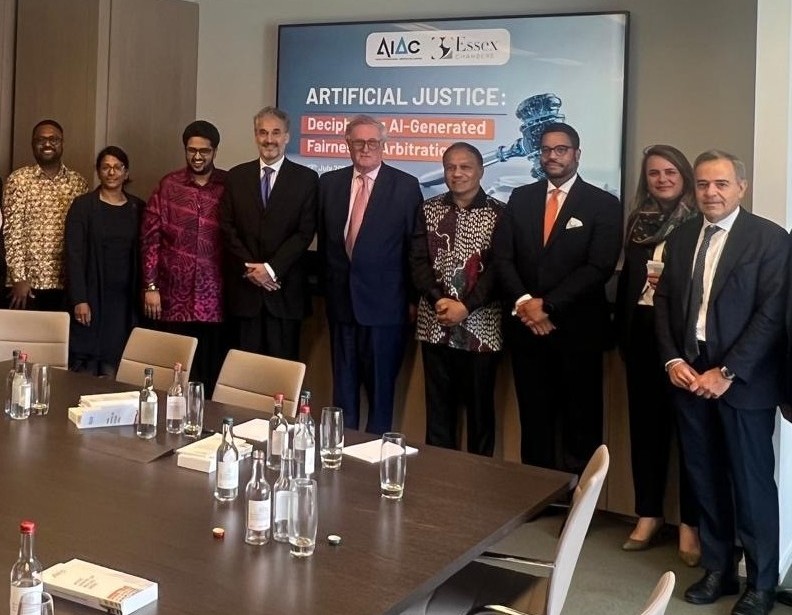
A recent Volterra Fietta seminar discussed the possible legal liability for States and private actors when they create space debris that causes damage to satellites.
Under the regime established by the 1972 Convention on International Liability for Damage Caused by Space Objects (the “Liability Convention”), Russia might be liable to another State if it could be shown that the debris created by Russia actually causes damage to a satellite operating under that other State’s flag. This is because, under Article III of the Liability Convention, Russia’s alleged military test may constitute an act of “fault” that gives rise to liability for the test’s consequences. There is also an argument that Russia could be liable for the additional expenses a satellite operator must incur for mitigating the effects of this reported cloud of space debris. This could include, for instance, the costs of tracking the space debris and of performing satellite manoeuvres to avoid the space debris.
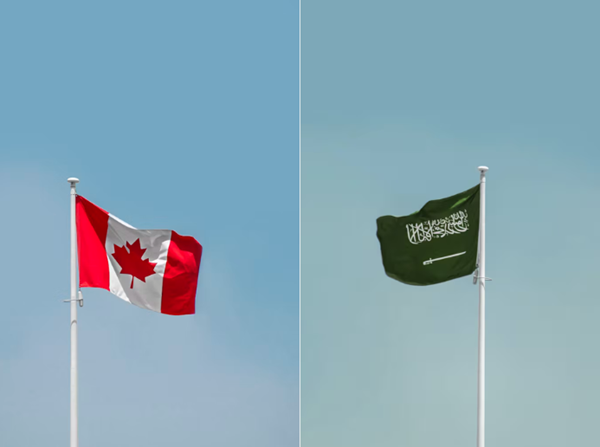
Under Article II of the Liability Convention, Russia may also be liable if (as is less likely) the space debris falls to the Earth and causes damage terrestrially. Under Article II of the Liability Convention, terrestrial damage must be indemnified under a regime of strict liability – and does not require a showing of fault. For example, Russia previously indemnified the Canadian Government for damage caused by the fall of the Kosmos-954 satellite in 1978. As is known to the authors, in a confidential matter, another potential claim under Article II was settled between a South American State and an East Asian State following the fall of another satellite into the South American State’s territory.
In addition to State-to-State indemnification under the Liability Convention, private companies whose satellites or operations are damaged by the resulting space debris might perhaps also seek damages from Russia under various national laws in national courts. In order to do so, such companies must likely overcome complex and technical doctrines designed to limit suits against sovereign States, such as sovereign immunity.
Multi-billion and hundreds-of-million dollar space disputes against States have also arisen three times in the last decade. This includes claims raised by (a) the satellite company Devas and its shareholders against the Republic of India following the annulment of a satellite contract; (b) the satellite company Eutelsat against the United Mexican States for alleged discrimination in government regulations; and (c) the media company Al Jazeera against the Arab Republic of Egypt for alleged interference with satellite signals. Volterra Fietta lawyers have represented clients as senior counsel in two of these three space disputes.
For further information, please contact Robert G Volterra (Robert.Volterra@volterrafietta.com) and Gunjan Sharma (Gunjan.Sharma@volterrafietta.com).