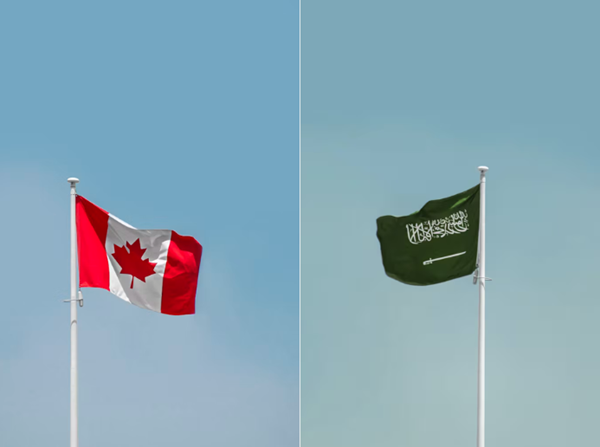
On 6 April 2022, the Government of Canada granted environmental assessment approval to Norwegian oil giant Equinor for its proposed USD 12 billion Bay du Nord offshore oil project. If and when the project reaches production, expected in 2028, Canada could become the first country in the world to make international royalty payments required for resource extraction in its outer continental shelf under the 1982 United Nations Convention on the Law of the Sea (“UNCLOS”).
Background
At approximately 1,200 metres’ depth, the Bay du Nord project lies in the Flemish Pass, some 500 kilometres off the coast of Newfoundland and Labrador. Equinor made its first oil discovery in the Flemish Pass in 2013, followed by additional discoveries in 2015, 2016 and 2020. The project is expected to be in operation for approximately 30 years and to extract at least 300 million barrels of oil.
Canada’s approval concluded that the project was not likely to cause significant adverse environmental effects, taking into account the relevant mitigation measures. It followed some four years’ environmental assessment by the Canadian Government’s Impact Assessment Agency. The approval requires Equinor to comply with 137 legally binding conditions throughout the life of the project – including, for the first time, the requirement for an oil and gas project to reach net-zero greenhouse gas emissions by 2050.
At a time of increasing attention to climate sustainability, the approval of a major new oil and gas project was not without controversy. In interviews with local media, Canada’s federal Minister of Environment and Climate Change Steven Guilbeault noted the reality of continued fossil fuel demand, while also flagging the need to move away from fossil fuel dependency. In contrast, for example, just one week later, Quebec’s National Assembly voted on 13 April 2022 to ban new oil and gas exploration within its territory.
Bay du Nord project may trigger first-ever international royalty payments under UNCLOS
If and when the Bay du Nord project reaches production, Canada could become the first country in the world to make international royalty payments under Article 82 of UNCLOS.
Article 82 requires coastal States to “make payments or contributions in kind in respect of the exploitation of the non-living resources of the continental shelf beyond 200 nautical miles”. This requirement is highly unusual, amounting in effect to an international tax on coastal States’ extraction of natural resources within their exclusive national jurisdiction. To date, there is not yet any oil or gas production so far offshore.
Under Article 82, payments or contributions in kind must be made annually after an initial grace period during the first five years of production. The rate of payment or contribution in kind is set at one per cent of the value or volume of production at the site for the sixth year, increasing by a further one per cent for each subsequent year until a maximum 7 per cent. Given the Bay du Nord project’s an estimated recoverable resource of around 300 million barrels, Canada’s exposure will be significant. However, with production not expected to begin until 2028, international royalty payments are unlikely to be triggered until 2033 at the earliest.
Under Article 82(4) of UNCLOS, payments or contributions in kind are to be made through the International Seabed Authority (the “ISA”), the intergovernmental body established under UNCLOS and based in Kingston, Jamaica. The ISA is tasked with then distributing the payments or contributions in kind among the States Parties to UNCLOS, “on the basis of equitable sharing criteria” and “taking into account the interests and needs of developing States, particularly the least developed and land-locked”. However, the ISA is yet to determine precisely what approach it will adopt to determine distribution of payments among States Parties.
Undecided who will cover the international royalty payment under UNCLOS
Although UNCLOS specifies that payments are to be made by the coastal State, it remains to be seen whether Canada intends to have the relevant payments covered by its federal government, by the provincial government of Newfoundland and Labrador or by Equinor itself. Reportedly, discussions are ongoing between the federal and provincial governments and industry as to precisely how and by whom Canada’s international royalty obligation will be met.
Elsewhere, a small number of States around the world have already addressed this issue well in advance of any offshore resource exploitation that may trigger Article 82 of UNCLOS. For instance, New Zealand’s Continental Shelf Act 1964 provides that the Crown shall make the relevant payments or contributions in kind, but that the relevant Minister must have regard to Article 82 when specifying the rate of royalties payable by offshore licensees and permit holders in the outer continental shelf. In contrast, when offering parts of the Arctic Barents Sea for exploration licensing, Norway warned bidders that they may be liable to cover certain costs in connection with Article 82, with rebates available against Norwegian petroleum taxes.
For more information on this client alert, please contact info@volterrafietta.com