Published on 20 May 2026 in Client Alerts
On 10 February 2026, the Council of the European Union published a near final draft of a regulation to change the European Union (“EU”) rules on screening foreign direct investments. Once implemented, the changes will significantly affect foreign investments into the EU. They widen the scope of investments that must be screened by EU authorities and increase the powers of authorities to review transactions that have already completed.
The proposed regulation will replace the EU’s current framework for screening foreign direct investments into the EU in Regulation (EU) 2019/452, which entered into force in October 2020. In light of growing geopolitical tensions and shortcomings of the current framework to safeguard public order and security across the EU, in January 2024, the European Commission proposed changes to the framework. In December 2025, the Council of the EU and the European Parliament reached a provisional political agreement based on the European Commission’s proposal.
While the EU’s organs may still make further changes to the draft text of the regulation, broadly the proposed new regulation would, among other things:
The European Parliament is currently expected to vote on the revised regulation during its next plenary sitting. If adopted without material changes to the February 2026 draft, the Council of the EU is expected to approve the regulation. Once in force, following an 18-month transition period, the regulation will apply to all new foreign investments.
This is yet another example of the increasing focus of the EU on regulating inbound foreign investment. The regulation that is expected to come into force will give significant powers to exclude contemplated and even expel existing foreign investment in the EU. Because it will be obligatory under EU law, EU law will not protect foreign investors targeted by the new rules. All current and potential investors into the EU will be well-advised to seek expert public international law advice about ways in which to protect their businesses from such potentially adverse governmental action using international law.
“Volterra Fietta are lawyers who think ‘dispute mitigation’, as opposed to other firms which chase me for ‘disputes work’.”
For further information, please contact info@volterrafietta.com.
From 8 to 10 July 2026, Canadian Prime Minister Mark Carney and Saudi Crown Prince and Prime Minister Mohammed bin Salman bin Abdulaziz Al Saud met in Jeddah to discuss bilateral relations and regional developments. The visit yielded the signing of 13 new Memorandum of Understandings (MOUs) and commercial agreements across trade, investment, energy, mining and natural resources, technology, education, health, people-to-people ties, and defence.
Learn more

On 13 July 2026, the United Kingdom and the Swiss Confederation announced the conclusion of negotiations on an enhanced free trade agreement (“FTA”). This followed ten rounds of negotiations to modernise the two States’ bilateral framework which were launched in 2023. The Parties have indicated that they anticipate the final technical edits to be finalised
Learn more
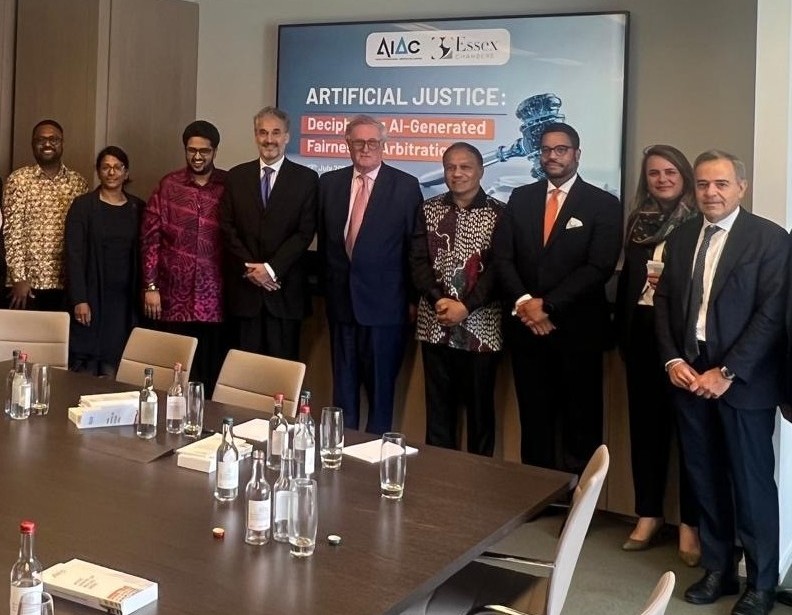
On 17 July 2026, Volterra Fietta partner Robert G Volterra spoke at the Asia International Arbitration Centre London Roundtable on “Artificial Justice: Deciphering AI-Generated Fairness in Arbitration”. Robert discussed the growing use of AI in legal practice and dispute resolution, focusing on the limits of current AI tools and the risks associated with their use.
Learn more
The Strait of Hormuz and the Bab al-Mandeb are two of the world’s most critical maritime chokepoints. From October 2023, the Houthi movement launched a sustained campaign of drone and missile strikes against commercial vessels transiting the Bab al-Mandeb, the narrow strait connecting the Red Sea to the Gulf of Aden. This prompted major shipping
Learn more