More Client Alerts
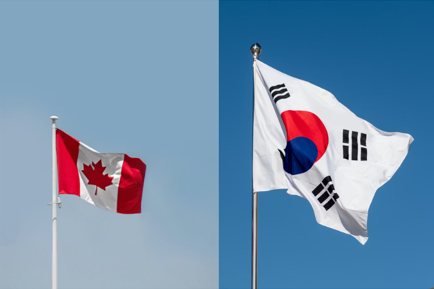
Canada and South Korea Sign Defence Agreement
On 25 February 2026, Canada and the Republic of Korea signed a new defence agreement in Ottawa during a Canada–Republic of Korea Foreign and Defence Ministerial Meeting. The agreement establishes a framework for the exchange and protection of classified military and defence information, following negotiations concluded in October 2025. The agreement forms part of broader
Learn more
Volterra Fietta promotes Florentine Vos to Counsel
Top-ranked public international law specialist firm Volterra Fietta is pleased to announce the promotion of Florentine Vos to Counsel, effective as of 1 April 2026. Since joining in 2019, Florentine has worked for the firm’s clients across the full range of public international law, including land and maritime boundary disputes, climate change, international organisations law,
Learn more
The Kingdom of Saudi Arabia approves regulatory frameworks for its Special Economic Zones
The Saudi Council’s ministerial Resolution No. 468, published in the Official Gazette on 16 January 2026, approves the governance regulations for each of the Special Economic Zones (“SEZs”), the King Abdullah Economic City SEZ, Ras Al Khair SEZ, Jazan SEZ and Cloud Computing SEZ, originally launched on 13 April 2023.
Learn more
UN General assembly adopts resolution to improve coordination against Human Trafficking
On 18 December 2025, the United Nations General Assembly adopted a resolution aimed at improving international coordination in efforts to combat trafficking in persons, reaffirming the need for a comprehensive and cooperative global response to one of the most pervasive forms of transnational organised crime.
Learn more