
Published on 20 November 2026 in Client Alerts
In a preliminary ruling requested by France’s Cour de Cassation, the Court of Justice of the European Union (CJEU) concluded that a payment (from a Norwegian company) to a non-sanctioned Yemeni state-owned company, pursuant to an arbitral award, could materially result in an indirect provision of funds to sanctioned parties, prohibited under EU sanctions regulation, provided that it is established that the latter are in a position “actually to obtain those funds”[1].
As the basis of its conclusions, the CJEU explained that the applicable prohibition “may also include the making available of those funds or resources to persons or entities which are not owned or controlled by listed entities”[2], whenever it can be established, upon “objective material evidence”, that there is a risk that those listed entities will benefit from said resources. Furthermore, the Court held that, for the interpretation of these sanctions, it shall be assessed, within the context and circumstances of each particular case, whether “the probability of that risk materialising is sufficiently significant to justify that prohibition”[3].
Based on this reasoning, the CJEU clarified that, for the specific case that motivated the ruling, the interpretation of the applicable EU regulation on sanctions shall consider Yemen’s ongoing civil war context, given the existence of parallel governance structures by the Houthi movement (a designated entity). This, considering that, even when the Yemeni government argues that the Houthis have no operational or financial link with the company, they have been (even illegitimately) “adopting measures which fall under the exclusive authority of the legitimate government” and “appear capable of (…) having sums intended for the state channelled to itself”[4].
Finally, the Court also noted that the burden of proving a risk of indirect provision of funds to designated entities lies with the party who argues its existence as a breach of applicable EU sanctions. Conversely, a defence on such grounds would require, among other elements, to demonstrate that sufficient measures have been taken to prevent sanctioned parties from having control over incoming resources to non-listed parties in related circumstances[1]. The CJEU further outlined that no presumption operates in favour of sanctioned entities when they claim control over non-sanctioned parties or their funds or assets, but that such ability must be verified by a court based on “sufficiently concrete, precise and consistent evidence” of the particular case.
See paragraph 94
See paragraph 56.
See paragraph 74.
See paragraph 60.
See paragraph 70.
For further information, please contact info@volterrafietta.com.
On 19 November 2026, the International Court of Justice (the “ICJ”) delivered its judgment in Application of the Convention on the Prevention and Punishment of the Crime of Genocide (The Gambia v Myanmar: 11 States intervening).
Learn more

In a preliminary ruling requested by France’s Cour de Cassation, the Court of Justice of the European Union (CJEU) concluded that a payment (from a Norwegian company) to a non-sanctioned Yemeni state-owned company, pursuant to an arbitral award, could materially result in an indirect provision of funds to sanctioned parties, prohibited under EU sanctions regulation, provided that it is established that the latter are in a position “actually to obtain those funds”[1]
Learn more

The Argentine Republic has brought proceedings against the United Kingdom (“UK”) under the United Nations Convention on the Law of the Sea (“UNCLOS”) concerning the authorisation of hydrocarbon activities in maritime areas near the Falkland Islands (Malvinas).
Learn more
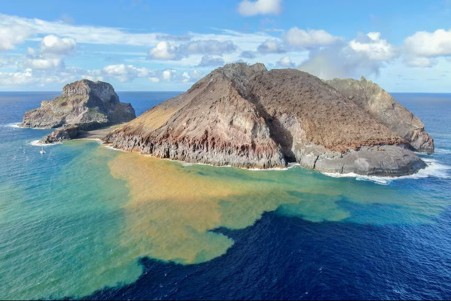
On 31 August 2026, the Republic of Vanuatu filed an Application instituting proceedings against the French Republic before the International Court of Justice (“ICJ” or the “Court”), requesting that the Court affirm Vanuatu’s sovereignty over two uninhabited volcanic islands in the South Pacific, Matthew (Umaenupne) and Hunter (Umaeneg/Leka), and establish a single maritime boundary between the exclusive economic zones and continental shelves of Vanuatu and France (with respect to New Caledonia).
Learn more