
Published on 20 November 2026 in Client Alerts
The Argentine Republic has brought proceedings against the United Kingdom (“UK”) under the United Nations Convention on the Law of the Sea (“UNCLOS”) concerning the authorisation of hydrocarbon activities in maritime areas near the Falkland Islands (Malvinas). The islands are the subject of a longstanding sovereignty dispute between Argentina and the UK, which led to armed conflict in 1982.
On 28 September 2026, Argentina instituted arbitral proceedings under Annex VII of UNCLOS. As Argentina has chosen the International Tribunal for the Law of the Sea (“ITLOS”) and the UK the International Court of Justice (“ICJ”) under Article 287 of UNCLOS, the dispute may be submitted only to arbitration under Annex VII, unless the parties otherwise agree. On 13 October 2026, pending the constitution of the Annex VII arbitral tribunal, Argentina requested ITLOS to prescribe provisional measures under Article 290(5) of UNCLOS to halt the Sea Lion oil project. By Order of 20 October 2026, the President of ITLOS fixed 10 and 11 November 2026 as the dates for the hearing.
The Sea Lion project is being developed under licences granted by the Falkland Islands Government, and drilling is expected to start in early 2027. In the arbitration, Argentina claims that the UK’s unilateral authorisation of the project breaches Argentina’s sovereign rights over the area and the UK’s obligations under UNCLOS, including those relating to the protection of the marine environment.
Argentina argues that drilling would create an irreversible fait accompli and asks ITLOS to order the UK to:
The UK Government told Parliament that it intends to engage with the process. The UK rejected Argentina’s claims in its formal response of 11 October 2026 and maintains that the project is lawful and that the Sea Lion field lies on the islands’ own continental shelf. For ITLOS to prescribe provisional measures, it must be satisfied that the arbitral tribunal would have prima facie jurisdiction and that the urgency of the situation requires such measures. UNCLOS tribunals have declined to rule on contested sovereignty over land territory, for example in Chagos Marine Protected Area (2015). A central question is therefore whether Argentina’s claims can be examined without deciding which State holds sovereignty over the islands. Argentina states that it is not asking for the sovereignty dispute to be settled. The UK has said that it will oppose any attempt to use the proceedings for that purpose.
For further information, please contact info@volterrafietta.com.
On 19 November 2026, the International Court of Justice (the “ICJ”) delivered its judgment in Application of the Convention on the Prevention and Punishment of the Crime of Genocide (The Gambia v Myanmar: 11 States intervening).
Learn more
In a preliminary ruling requested by France’s Cour de Cassation, the Court of Justice of the European Union (CJEU) concluded that a payment (from a Norwegian company) to a non-sanctioned Yemeni state-owned company, pursuant to an arbitral award, could materially result in an indirect provision of funds to sanctioned parties, prohibited under EU sanctions regulation, provided that it is established that the latter are in a position “actually to obtain those funds”[1]
Learn more

The Argentine Republic has brought proceedings against the United Kingdom (“UK”) under the United Nations Convention on the Law of the Sea (“UNCLOS”) concerning the authorisation of hydrocarbon activities in maritime areas near the Falkland Islands (Malvinas).
Learn more
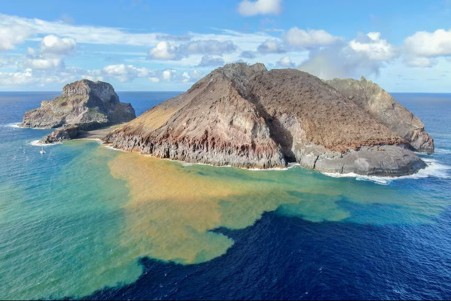
On 31 August 2026, the Republic of Vanuatu filed an Application instituting proceedings against the French Republic before the International Court of Justice (“ICJ” or the “Court”), requesting that the Court affirm Vanuatu’s sovereignty over two uninhabited volcanic islands in the South Pacific, Matthew (Umaenupne) and Hunter (Umaeneg/Leka), and establish a single maritime boundary between the exclusive economic zones and continental shelves of Vanuatu and France (with respect to New Caledonia).
Learn more