Published on 13 January 2025 in Client Alerts
Volterra Fietta successfully defends Barbados from activists and NGOs at Inter-American Commission on Human Rights hearing on Cybercrime Bill
Background
In 2021, the Government of Barbados recognised that the country required a new cybercrime bill to deal with the onslaught of financial, sexual, hate and other online crimes increasingly targeting Barbadians. For three years, it worked with domestic and international experts to create a new legislative framework to fight cybercrime. It also conducted extensive public consultations, including specifically about the draft legislation. The outcome was the Cybercrime Bill, currently before Parliament and soon to be enacted into law.
Support from Barbadians but opposition from activists and NGOs
There is widespread support within Barbados for cybercrime legislation. Nonetheless, a group of activists and NGOs have been criticising certain aspects of the draft legislation. They claim that it violates their freedoms of expression and religion. The group includes at least one well-funded international human rights NGO. This group and likeminded people participated in public consultations in Barbados; they were unhappy that the Government made some, but not all, of the changes to the draft legislation that they wanted.
A few months ago, this group applied to the Inter-American Commission on Human Rights (“IACHR”) requesting that it conduct an inquiry into the Cybercrime Bill. The group apparently hoped that the IACHR would criticise the Government of Barbados and the Cybercrime Bill. The IACHR agreed to conduct an inquiry and eventually held a hearing on the impact of Barbados’s Cybercrime Bill on freedom of expression, religion and conscience on 11 November 2024.
Barbados hired Volterra Fietta to defend it from these activist and NGO accusations and to represent it at the hearing. The outcome was a complete victory for Barbados. It successfully defended its Cybercrime Bill without any criticism from the IACHR. The IACHR even commended the Government for having conducted extensive public consultations about the legislation.
The 11 November 2024 Hearing
The activists and NGOs had made written submissions in advance of the hearing and spoke at the hearing itself. Represented by Volterra Fietta, Barbados submitted responsive written observations to the IACHR in advance of the hearing. At the hearing, which was televised live, Barbados was defended by Professor Robert G Volterra, partner at Volterra Fietta. Volterra Fietta successfully demonstrated to the IACHR that Barbados’s Cybercrime Bill is necessary to protect the country from the harmful effects of cybercrime and is also consistent with international standards, including international human rights standards.
At the end of the hearing, the IACHR endorsed the importance of protecting Barbadians from cybercrime. It also expressly recognised that the Government of Barbados has been proactive in providing significant opportunities for civil society groups to be consulted and share their views on the Cybercrime Bill. The IACHR did not make any criticism of the Government of Barbados nor did it issue any recommendations for the Government of Barbados.
A video of the hearing is available on the IACHR’s website (See here). Barbados’s observations begin at 24:30 minutes and its Reply begins at 1:16:08 hours.
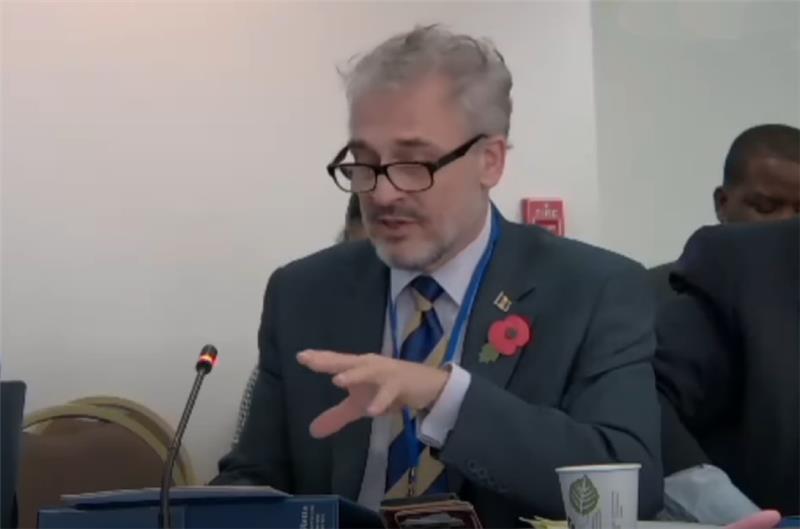
Photograph of Robert Volterra pleading at the IACHR hearing.
For further information, please contact info@volterrafietta.com.